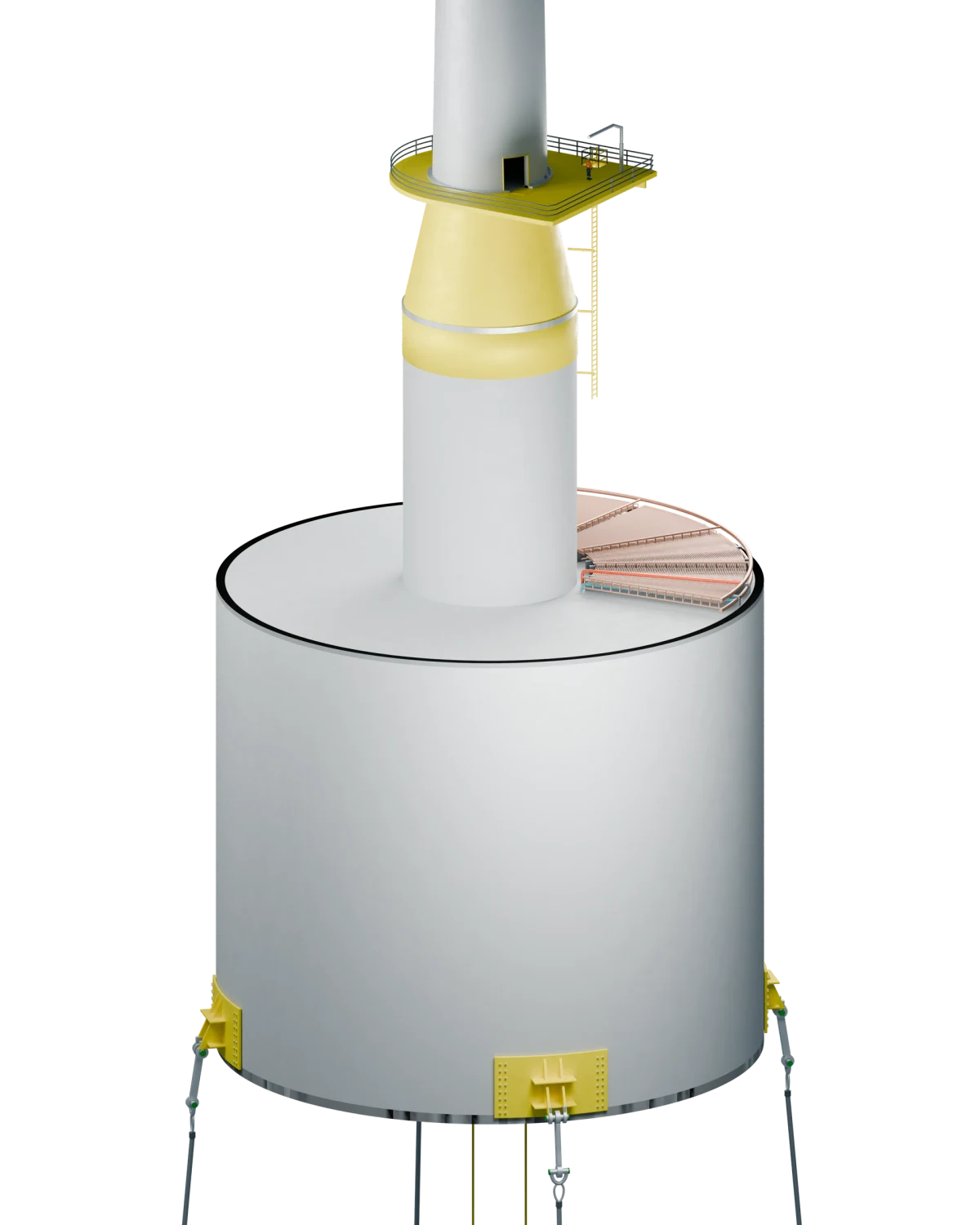
Designed for wind-powered, off-grid compute. The foundation provides space for data centers and supporting systems, with seawater heat exchange for cooling without freshwater consumption and port-side fabrication as the delivery approach.
Foundation exterior and marine access.
The platform
A floating foundation.
Space for compute.
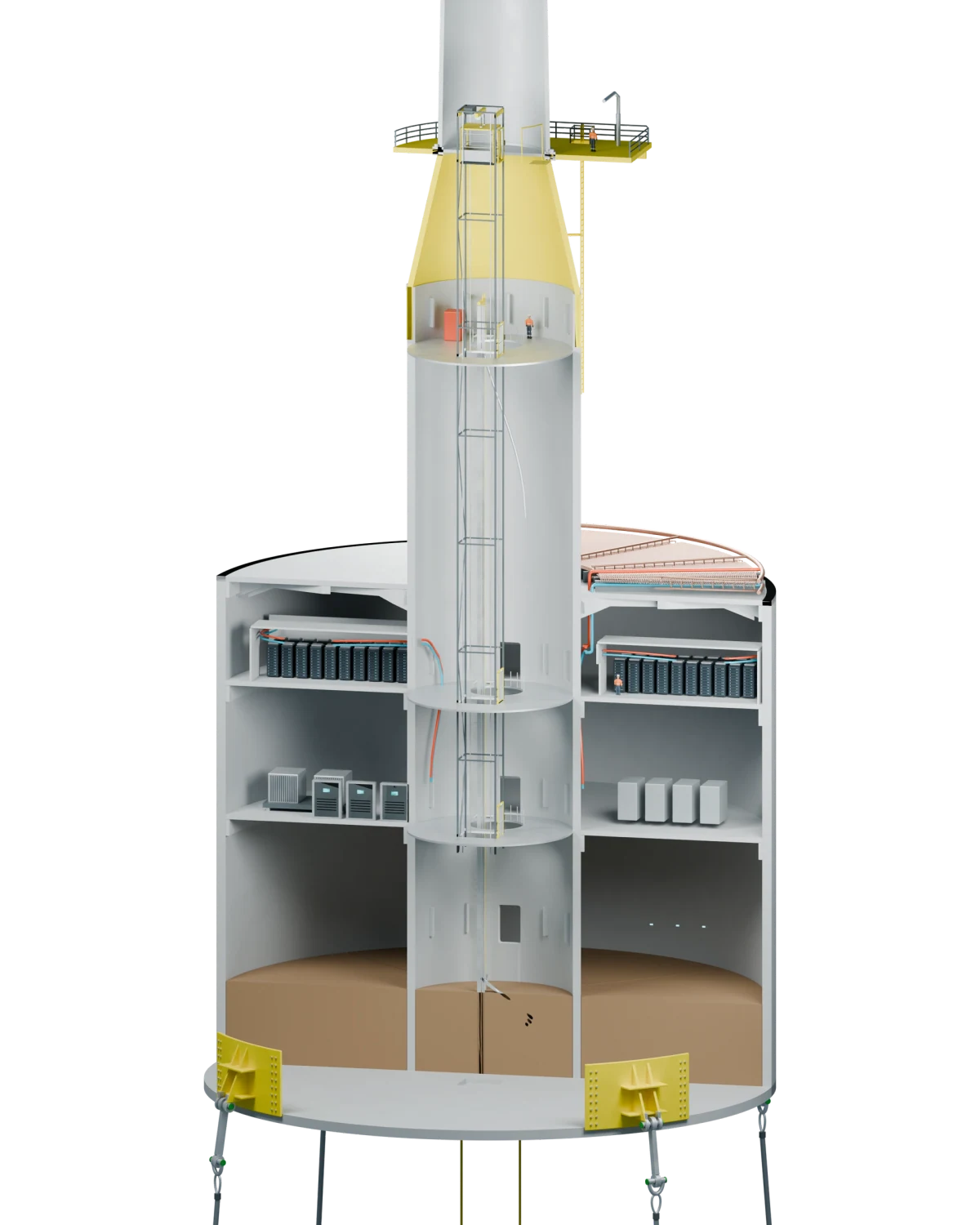
The cylindrical foundation is designed to support a wind turbine and house a data center for deep-water deployment. The same foundation can also serve conventional offshore wind projects that supply electricity to the grid.
Turbine support, internal space, and marine access.
Inside the foundation
Computing space.
Supporting systems.
A closer look at the rooms, decks, and service connections within the foundation.
Internal decks, service access, and ballast.
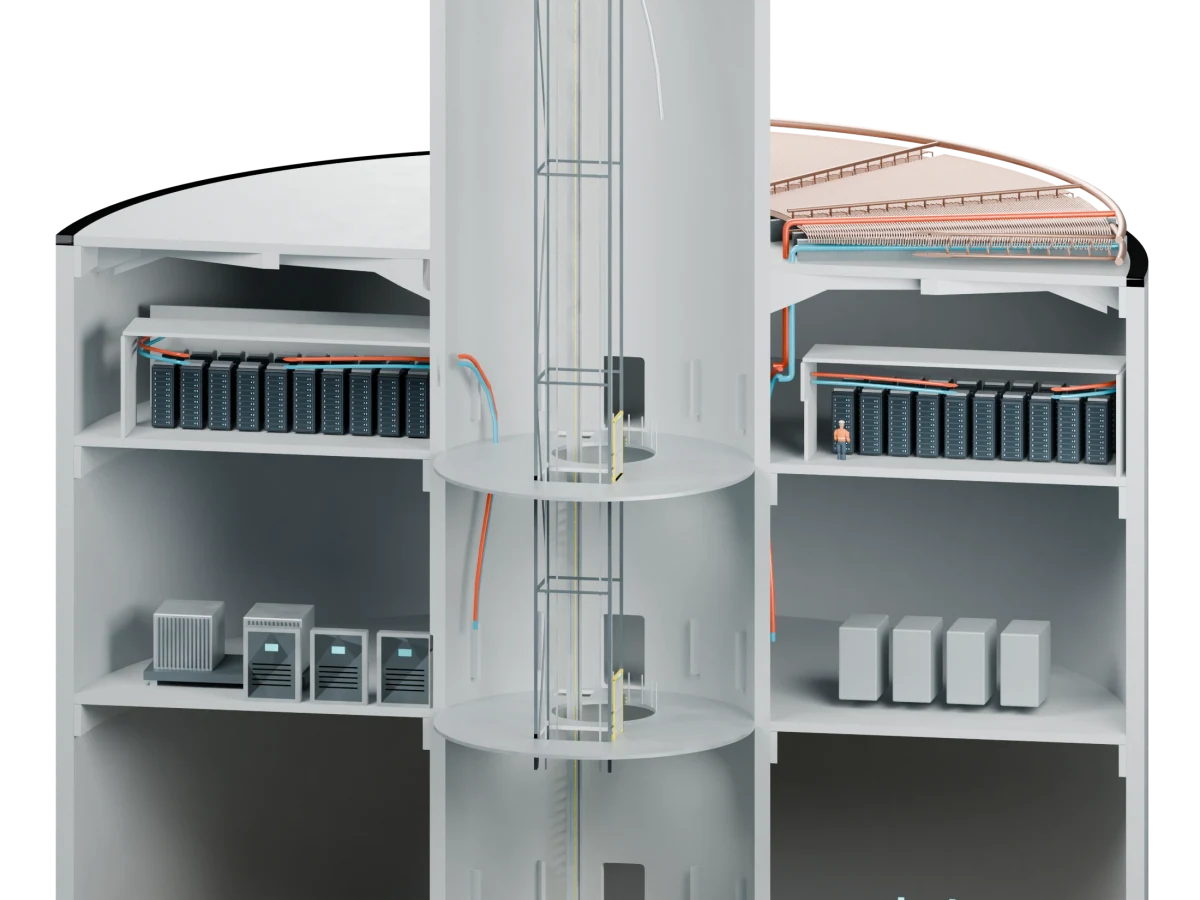
Server racks and supporting systems.
Internal decks, service access, and ballast.
The interior
Computing rooms on internal decks.
Server racks sit on internal decks, with space for service access and supporting equipment. We develop room layouts around customer hardware, cooling, and maintenance needs.
↳Rack rooms, supporting decks, and access routes.
Server racks and supporting systems.
Computing & systems
Power, cooling, and connectivity.
Wind generation, energy storage, and fiber connectivity serve the data center. Seawater heat exchange is designed to provide cooling without freshwater consumption. Rack layout, power distribution, and service access are coordinated within the foundation.
↳Racks, service connections, and supporting equipment.
The operating approach
Designed for off-grid operation.
We are developing compressed-air energy storage to balance wind generation and compute demand. Off-grid configurations can also use batteries, or combine both technologies. Fiber provides the primary data connection to shore, with satellite included for redundancy.
An optional grid connection enables exports of surplus wind power and imports when needed. The configuration is designed for annual net export.
Wind generation
Renewable power produced offshore
Energy storage
Multiple options possible
↓↕↓
Offshore compute
Wind-powered data centers
↕↕
Optional grid connection
Export surplus power.
Data connectivity
Multiple options possible
Performance optimazation tools
Balance workloads
Workload planning
We develop software that uses wind forecasts to plan suitable workloads across eligible sites. Customer needs, available capacity, and data residency determine where work can run.
Storage integration
We are developing compressed-air energy storage to balance wind generation and compute demand. Storage sizing and controls follow the wind resource, facility demand, and operating profile.
Repeatable project delivery
Our delivery approach combines port-side fabrication, tow-out, and reusable design work. Site engineering, marine consents, and fiber provision are planned alongside deployment.
Start a conversation
Build your compute
with us.
Bring your next compute project offshore. Talk to us about capacity, power, cooling, and the route from fabrication to operation.